two
Americannoun
-
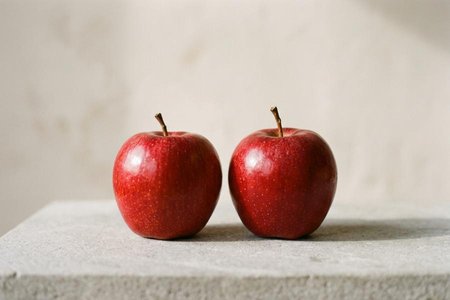
a cardinal number, 1 plus 1.
-
a symbol for this number, as 2 or II.
-
a set of this many persons or things.
-
a playing card, die face, or half of a domino face with two pips.
adjective
idioms
-
put two and two together, to draw a correct conclusion from the given circumstances; infer.
It didn't require a great mind to put two and two together.
-
in two, into two separate parts, as halves.
A bolt of lightning split the tree in two.
noun
-
the cardinal number that is the sum of one and one. It is a prime number See also number
-
a numeral, 2, II, (ii), etc, representing this number
-
music the numeral 2 used as the lower figure in a time signature, indicating that the beat is measured in minims
-
something representing, represented by, or consisting of two units, such as a playing card with two symbols on it
-
Also called: two o'clock. two hours after noon or midnight
-
in or into two parts
break the bread in two
-
to make an inference from available evidence, esp an obvious inference
-
the same applies to me
determiner
Usage
What's the difference between two, to, and too? Two is the number equal to one plus one. To is a very common word that performs many different functions, such as expressing direction (I’m driving to the office) or contact (Pin it to the wall), indicating an object or recipient (Give it to me), or setting a range (9 to 5) or limit (These go to 11). Too means also (I’m going, too) or to an excessive degree (too much). The words are used in very different ways: two is a number that can be used as a noun or an adjective, to is most commonly used as a preposition, and too is an adverb. Perhaps the most common mistake involving the three words is using to when it should be too, or vice versa. Remember, if you mean to, don’t use too many o’s!Here’s an example of two, to, and too used correctly in the same sentence. Example: The dealer dealt two twos to me, but it was two twos too few—my opponent had a full house!Want to learn more? Read the full breakdown of the difference between two, to, and too.
Etymology
Origin of two
before 900; Middle English; Old English twā (feminine and neuter; cf. twain); cognate with German zwei; compare Latin duo, Greek dýo
Explanation

Two is a whole number that's greater than one, but less than three. If you found one fuzzy mitten and then your friend gave you another one, you would have two mittens — perfect for your two hands. In a deck of cards, there are four twos — one in each suit. In most games, the two is considered the lowest card. Two can also be used as an adjective to describe anything that numbers one more than one. In cards, if you have a pair of twos, you have two twos. This spelling of two always refers to a number and shouldn't be confused with the homonyms "to" or "too."
Vocabulary lists containing two
Spelling Practice, Unit 8
Looking to grow your vocabulary? Check out this interactive, curated word list from our team of English language specialists at Vocabulary.com – one of over 17,000 lists we've built to help learners worldwide!
Spelling Practice, Unit 3
Interested in learning more words like this one? Our team at Vocabulary.com has got you covered! You can review flashcards, quiz yourself, practice spelling, and more – and it's all completely free to use!
Spelling Practice, Unit 6
Want to remember this word for good? Start your learning journey today with our library of interactive, themed word lists built by the experts at Vocabulary.com – we'll help you make the most of your study time!
Example Sentences
Examples are provided to illustrate real-world usage of words in context. Any opinions expressed do not reflect the views of Dictionary.com.
At a community college, where the players change every one or two years, continuity depends on the culture being passed down from one generation to the next.
From Los Angeles Times ● Oct. 18, 2026

His Likud party also circulated a campaign video featuring the two leaders.
From Salon ● Oct. 18, 2026

Cardiff's return to the top tier of Europe after two seasons in the Challenge Cup was a considerable one.
From BBC ● Oct. 18, 2026

“Some people don’t want an electric car, and we just have two choices,” Simonetti said.
From The Wall Street Journal ● Oct. 18, 2026

It’s hard enough just trying to walk between two worlds.
From "Split the Sky" by Marie Arnold

Random Word
Spin the wheel and learn a new word!
Get a wordDefinitions and idiom definitions from Dictionary.com Unabridged, based on the Random House Unabridged Dictionary, © Random House, Inc. 2023
Idioms from The American Heritage® Idioms Dictionary copyright © 2002, 2001, 1995 by Houghton Mifflin Harcourt Publishing Company. Published by Houghton Mifflin Harcourt Publishing Company.
